Call Us: +86-595-22817818Email: tianli@tianli-china.net
enLanguage

Dry Polishing Pad

Why Choose Us

Quality Control

We have professional personnel to monitor the production process, inspect the products and ensure that the final product meets the required quality level standards, guidelines and specifications.

Professional Team

We have a team of experienced professionals dedicated to ensuring that every aspect of our business follows the highest standards.


Rich Experience

Dedicated to strict quality control and attentive customer service, our experienced staff is always available to discuss your requirements and ensure complete customer satisfaction.

Our Service

Our professional team is composed of pre-sales, sales, and after-sales experts who are dedicated to providing excellent service throughout the entire customer service process.


What is Dry Polishing Pad


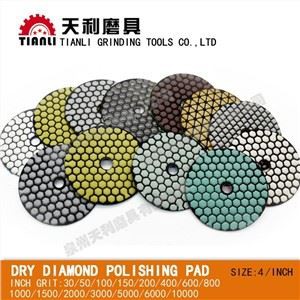
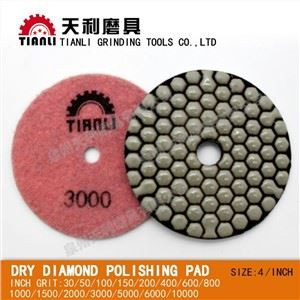
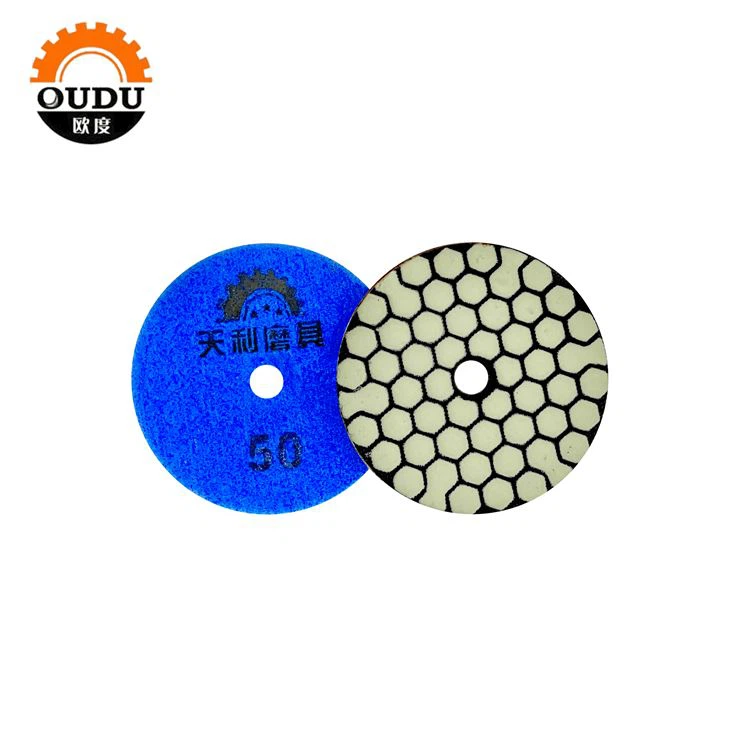
The Dry Resin Polishing Pads are designed to polish granite, marble, concrete and other natural and engineered stone. Each pad contains a high quality and concentration of diamonds to provide a fast and smooth polishing, with a fantastic finish. Specially formulated resin matrix provides exceptional performance and life in dry polishing applications.


First 1234567 Last 1/15

Advantages of Dry Polishing Pad


Features convenient Velcro backing for easy attachment.

Compatible with all machines available in the market.

Specifically designed for aggressive concrete polishing.

Ensures a long life expectancy for extended use.


Wet and Dry Polishing Similarities


When it comes to the actual task of polishing stone. There are many similarities between wet polishing and dry polishing. We will consider a couple of these parallels here.


The Tools
The tools used to perform polishing on granite, marble, or other materials are very similar in nature. First, both processes use some sort of grinder that can be used to spin a series of “pads” or “discs” at a high rate of speed. These discs (or pads) vary in how coarse the surface is. This is similar to how sandpaper is described for woodworking. These pads are designed in a particular way.
The polishing pads are very frequently designed with a hook and loop style backing that allows for easy fastening and removal from the grinding machine. The surface that is used to actually polish the natural or engineered stone is made from a resin that has diamond dust suspended inside the pad.


The Process
The process also has similarities. Whether you are wet polishing or dry polishing, the process works like this; You begin with a coarse polishing pad and you grind the surface of the stone with it for the proper amount of time. You then repeat that action with a pad that has a finer “grit”. Again, this is much like sanding wood only the process is used on stone. This is repeated for the number of steps required based on the polishing pad system you are using. Once you have completed the series, you have a smoothly polished stone surface.
Even though the polishing tools and methods are the same there are differences between them. Those differences will be discussed next.


Differences Between Wet and Dry Polishing


There are a couple of main differences between the wet and dry stone polishing techniques. These differences are primarily influenced by 1) The pad design and 2) The work environment.


The Design of the Pads
The polishing pads tend to heat up as they are used to wear away the stone’s surface.
Dry polishing pads are designed to withstand a higher temperature than are the wet pads. Yet, wet polishing can sometimes provide a higher degree of shine due to the fact that the pads are kept cooler. However, technology has now produced dry pads that can compete very well with wet pads.


The Work Environment
The cooling of the pads is one of the functions of the water used in the wet polishing technique. Another task the water performs is the cleaning away the dust that is generated from the wearing down of the stone.
The necessary presence of water in the environment means that the fabricator will most likely need to have an area designed specifically for wet polishing. The water can create quite a mess and setting up a wet polishing environment in the customer’s home is just not practical. Therefore, using wet polishing pads is usually better suited for a fabrication shop.
Dry polishing pads do not require the water to cool the pads. Because of this dry pads are potentially a better choice on site polishing and installs. They do however cause dust in the environment. This can require you to utilize some sort of dust collection system to remove the particles form the air to keep the environment clean.

17 抛光垫
Zfe Polishing Pads

Use of 4" Dry Polishing Pads


● Ware an apron, a gauze mask and safety glasses first. Connect a Back Holder to the Polisher or Angle Grinder, and attach a Dry Pad of grit 50 to the Back Holder. Set the speed at 3,000-4,000RPM and start polishing process.


● Moving two passes across and one pass up and down is a good technique. Make sure all prior scratches are removed before moving onto the next grit.Repeat the same process using all 7 pads to complete the polishing process.Polish from grit 50 to grit 3000 respectively. Do not skip.


● Dry pads are designed for use on jobs without using water, but polishing with a small amount of water to wet the object surface will ultimately reach a better result.


● If you want to achieve the best polishing results on granite or other natural stones, use Buff Pad as the last step. Wet the workpiece and run the Buff Pad semi-wet with very low water. When the water is consumed, the process is complete. Repeat as necessary to improve the luster and achieve the mirror effect result.

Dry Polishing Pad Specifications


● Premium grade pads with high performance diamond grain.


● Size 100mm (4in).


● Grades from 50 (coarse) to 3000 (ultra-fine), plus white and black buffing grades.


● 9 disc set includes all grades, 50, 100, 200, 400, 800, 1500, 3000, white buff, black buff.


● Air cooled by rotating action.


● Use below 4,000rpm for best results.


● Designed for dry use, but also suitable for wet use where situation permits use of water.


● Loop grip backing for use on grip backing pads.

dry polishing pads for granite


Dry Polishing Pad Uses


These pads polishing pad are designed to produce a high-quality shine on Basalt, Granite, Limestone, Marble, Polished Stone, Stone Tesserae Mosaics and Travertine. Not to be used on a surface with a high resin content such as Quartz as the heat from the polishing will burn the Resin in the stone and not to be used alongside Encaustic patterned tiles as the pattern will be removed
Manufactured using high density diamonds to improve sharpness and extend longevity they need only half the effort when compared to the traditional 7 step polishing process.


productcate-548-548

Dry Polishing Pads for Granite & More


The Triad dry granite polishing pads allow the fabricator to perform a variety of tasks on an array of material. For example, the following tasks can be performed:
● Bullnose Polishing
● Round Overs
● Ogee Edges
● Polishing Inside Bowls


However, granite is not the only material on which you can use the Triad dry pads. They also may be used to polish the following:
● Marble (Wet or Dry)
● Quartzite (Wet or Dry)
● Engineered Stone (Wet Only)


Dry Polishing Pad Durable Construction


All aspects of this polishing pad have been reconsidered. This was done so that these dry granite polishing pads that will hold up under a variety of uses. So let’s consider some elements that have been revolutionized.
Although it may not seem critical, the pattern on the surface of this pad is important. The maximum amount of diamonds are coated with ceramic crystals. This is due to the triangular design and curve of the pattern on the pad. In turn, this offers the most utilized concentration of diamond as possible. In addition to that, the triangular pattern on the cutting surface releases the maximum amount of heat. As a result, the ceramic bond is 20-30% cooler than other dry diamond polishing pads.
Another facet of the Triad’s construction to consider is the backing to which the diamonds are attached. The back is extremely durable and flexible. Also, it does not release the diamonds. Hence, The Triad polishing pads are excellent for polishing curved surfaces.


Wet Vs Dry Polishing, Which Is Better?


We get asked this daily. There is really no definitive answer as in most cases there is a crossover area where both are as effective as the other.
The only way to really compare the two processes is to actually talk through the products individually and explain what they are designed for. That way you can make the most suitable choice of product for your particular set up.


Wet Diamond Pads
These tend to be Velcro backed pads with diamond or diamond dust suspended in resin (sometimes resin and copper). Using water with these pads keeps the resin cool and stops the pads overheating and burning out too quickly. The water also helps remove the waste material that is being “cut” by the polishing process in the form of a slurry.
The lower the number the more coarse the pad.
Wet polishing consistently produces the best finish when looking for that mirror shine finish. The pads are less expensive than the dry variants but the machinery to use them is generally more expensive. Oh and it’s very messy. You’ll need wellies and a full length rubber apron if you want to stand any chance of keeping dry.
Wet diamond pads will polish pretty much anything from porcelain, marble, terrazzo, quartz, limestone, travertine right up to the hardest granite.
In every tile, stone and quartz factory in the world there will be line polishing machines using diamond pads cooled by water for finishing the surface of the products.


Dry Diamond pads
These tend to be Velcro backed pads with diamond dust suspended in resins, the difference with the wet pads is the resin is more dense (harder) and able to withstand higher temperatures. Fundamentally they work in the same way as wet pads, by wearing away the resin to expose the diamond which polishes the surface. The lower the number the more coarse the pad.
The obvious advantage is you don’t have to dress like a fishmonger to use dry pads. Also they can be used where wet pads simply wouldn’t be practical, i.e. on a finished job or for smaller jobs where a full wet set up is just going to take too long. But they do create dust, so if you’re polishing in volume dust extraction becomes a consideration as does filtering the air you breathe by using masks etc.
Filtering is particularly important with some man made products such as engineered stone or quartz as there is some suggestion the dust produced while polishing these products could be a carcinogen. The jury is currently out on this but better to play safe.
The technology now is such that the performance of dry pads is pretty close to wet pads for surface finish, there’s not much to choose between them.
The dry pads are more expensive to buy than wet pads, the resin is harder to cope with higher temperatures and as such dry pads tend to be more suited to harder materials such as granite and particularly dense concrete.
You can polish “softer” sedimentary or metamorphic stone such as limestone, travertine and marble with dry pads, but they often need to be “dressed” before first use, that means running them in on something very dense like black granite to first expose some diamond.


Silicon Carbide Pads
These pads are made up of a fine grit of Silicone Carbide (SiC) which is also known as carborundum, glued to the face of paper discs. The size of the grit determines the coarseness of each pad, just like sandpaper or wet and dry paper.
The pads come paper backed or velour backed. The paper backed are cheaper and you’ll need a plain backer and some contact adhesive onto which to stick them. Most masons use a variety of carpet/vinyl contact adhesive that can be picked up in most flooring stores or on line.
The velour backed pads are attached to a Velcro backer, so you don’t have the nuisance of sticking and unsticking the pad each time you need a new one, which can be quite often. Obviously you pay for the convenience, so the velour backed pads cost more.
These pads have a very short lifespan but are inexpensive buy costing £0.30 to £0.45 per pad depending on the volumes bought. They are throwaway items like sandpaper.
The velour backed pads are used exclusively dry. The plain backed pads are used dry up to P-320 grit and above that can be used wet, from P-400 through P-1200.
SiC pads will polish:- Marbles, travertine, limestone, porcelain, quartz, fibreglass, plastic materials and glass. They are extremely versatile and as such you will find boxes of these pads in every stonemasons yard or factory.
The only reason to step up to using diamond pads is for economy purposes due to the volume of SiC pads you’re using or for convenience. One set of diamond pads will outlast a few boxes of SiC pads.


The Machines
There is a vast array of machines available for use with polishing pads of all types. So for the purpose of this comparison I’ll pick the two we sell in reasonable volume.
FLEX LW1503 wet polisher. This is a dedicated polishing machine. It has a 800w motor soft start and an attachment to accept any garden hose for a water feed that sends water down the centre spindle through the hole in the centre of wet diamond pads. Fixed speed of 3700 rpm – 110v only.
If you’re looking for a good quality dedicated wet polisher, this is it.
If you’re looking for wet machine with variable speed the you’ll want the LE 12-3 100 variable available in either 230v (with PRCD) or 110v. It has a powerful 1150w motor and a speed range of 1200-3700 rpm.
You could also use our profiling tools with this machine with or without centre water feed.
FLEX L1506VR polisher/grinder. This is quite a versatile machine which is why they are popular. It has a powerful 1400w motor, soft start and is speed variable from 2200-6800rpm. Available in 110v or 230v.
This is an ideal multi purpose machine if you want to do more than just polish. Grinding and cutting at 6800rpm gives you more control. This is an ideal if you’re looking for a machine that will do controlled cutting and grinding which will also do a little polishing.
If you’re wanting a dedicated dry polishing machine we’d recommend the FLEX L1503VR this is a dedicated polisher with a speed range of 1200-3700rpm.
We do see this machine used with wet pads occasionally with a hose set slowly trickling across the work piece and wet pads attached to the machine. If you are going to use it in this manner we’d strongly suggest getting the 110v version. Obviously it’s meant to be used dry and isn’t designed for getting covered in water.
With any variable speed machine, no matter what manufacturer you chose it’s important to buy the appropriate piece of equipment for your intended long term use.
Variable speed machines don’t cope well with being used for extended periods of time at the low end of their speed range, they tend to overheat. By extended we mean 30 minutes


Our Factory


Quanzhou Tianli Grinding Tools Manufacturer Company is currently the most professional manufacturer of abrasive stone. Founded in 1997, mainly engaged in resin abrasive, diamond abrasive, abrasive marble, granite, abrasive, abrasive and antique shaped abrasive such as different types of products.Since the inception date, the company insisted that "fine abrasive," the business strategy and market-oriented market strategy, with "high-tech, diversified, international" as a standard, strictly the company"s daily production operations, the establishment of strict production management, product quality assurance system and domestic and international marketing network, so that production and operation of "doing." With the growing size of the company, the company set up by the high level of professional and technical personnel consisting of R & D center, substantially increased the company"s core competitiveness, enterprise development and staff have made personal development sided win situation.Products through national and provincial quality inspection bodies of detection and identification, by the majority of praise and trust of customers home and abroad. Excellent product quality and stability, rare earth polishing superhard abrasive grinding and polishing the stone in the rapid and high gloss coating, its overall performance in the industry is leading. Product sold more than 20 provinces and the United States, Italy, Australia, South Korea, Japan, Thailand, Indonesia, the Netherlands and other countries.


FAQ


Q: What does dry buffing do?

A: Purpose: The primary goal of dry buffing is to smooth out minor scratches, scuffs, or imperfections that might be present on the surface. It can also help to refresh the sheen and lustre of a wood floor, especially if the finish has become dull over time. Benefits: Dry buffing is less invasive than full-scale sanding.

Q: When should you throw away a polishing pad?

A: Cutting (and some polishing) pads wear and lose their "cut"; they become less aggressive. Other than that, I hardly ever throw pads out until there`s an issue with the velcro or the foam starts to get *really* chewed up.

Q: How do you dry a polish pad?

A: Once clean, rinse well and push all excess water from the pad. Then let it air dry face up. Pads that are extremely soiled may need to be soaked for another 15 minutes. Once all your pads are dry, make sure to store them in a plastic bag so they will stay clean for next time.

Q: Should polishing pads be damp?

A: It is very important to dampen the pad throughout, this does not mean dripping wet or barely misted with water.

Q: Do you need to prime a polishing pad?

A: Why prime the pad? Priming the pad ensures that none of the pad is dry when it's in contact with the paint. The pad will glide over the paint a little more easily from the start because the product and its lubricants have already been distributed over the pad face.

Q: Can you clean and reuse polishing pads?

A: Buffing and polishing pads are comprised of pliable, washable, and reusable materials. So it's relatively easy to rinse them or throw them in the wash for reuse. Utilizing a dedicated pad cleaner such as CARPRO MFX will aid in removing polish or wax.

Q: What is the difference between buffing pad and polishing pad?

A: Buffing is more aggressive and uses an abrasive compound to clear away marks and scratches while polishing is less intense and uses a smoother abrasive material to create a shiny, reflective surface.

Q: Why do polishing pads turn black?

A: It could've turned black due to a number of things, usually it's because the pad comes in contact with rubber trim alongside the sunroof or around the windows, etc. Add that up with the cleaning of the paint that's happening and you could wind up with a black pad in a matter of seconds.

Q: How do you dry polishing pads fast?

A: The way I clean pads is with a pad washer using a rotary buffer and then air dry them. It's the fastest way I can do it that's also efficient.

Q: Why does polish take so long to dry?

A: Dark nail polish typically takes longer to dry than lighter nail polish due to the darker pigment. Your nails may also be taking too long to dry because the layers are too thick. Adding multiple thick layers can slow the drying process because of the amount of polish that needs to dry.

Q: Does car polish need to dry?

A: Allow the car to dry.
You may dry the vehicle using microfiber towels if you'd like to expedite the process. If you have hard water, allowing the water to air dry could leave small spots on the paint, so you may want to use towels to keep water spots from forming.

Q: Do you wash buffing pads after use?

A: 1. Spray Pad washer spray onto pad while on buffer and let soak for 15-20 secs.
2. Griots grit guard bucket with water filled up to the “guard”
3 .On the low speed setting, use the Griots grit guard bucket to clean the pad. Do this for 15-20 secs.
Remove pad from buffer and dry with a clean microfiber.

Q: What do you spray on a polishing pad?

A: Mist the pad with 1 - 3 spritzes of Polishing Pad Conditioner. Use Chemical Guys Polishing Pad Conditioner on any foam, microfiber, or wool buffing and polishing pads whenever compounding or polishing.

Q: What comes before polishing?

A: Thoroughly wash the car using a strong ratio of wash solution to help strip any previous waxes and/or sealants. A clean, wax/sealant-free finish is required to get the most out of our polishing session. Clay the surface of the car to remove any embedded contaminants that doesn't come off with normal washing.

Q: Why do some polishing pads have holes?

A: The perforations provide a break in the surface tension of the material and help to prevent suction on the surface of the pad.

Q: Do you let polish dry before buffing?

A: Then, allow the polish to dry by setting the shoes aside for 10-20 minutes. The final step in polishing is to buff the shoe vigorously using your brush, which will help to work the polish into the leather and remove any excess, as well as create a bit of a shine.

Q: Can you use polishing pads more than once?

A: Are Polishing Pads Reusable? Absolutely. In use, polishing pads will gradually become saturated with spend compound/polish and paint residue, and by far, the best way to clean them out (whether they be wool, microfiber or foam) is with a dedicated pad washer.

Q: How long can a polishing pad last?

A: Heat during use is the main killer of pads because they soften up as they warm up, and can break down. If you're using one pad of each type per vehicle you're not going to get much life out of the pad.. maybe 2 to 5 cars before it loses its bite and ability, especially working a hot car.

Q: What do the colors of polishing pads mean?

A: The green pad is most suitable for deep scratches and hard lacquers. The grey pad is most suitable for extreme gloss and soft lacquers. The yellow and white are in between. The yellow pad has a little more abrasive power, the white pad gives a little more gloss.

Q: What is the best polishing pad for oxidation?

A: WOOL PAD - highly aggressive pads used for cutting or heavy compounding and removes extreme swirls or oxidation on very hard paint. It removes heavy oxidation much better than foam pads and generates less heat resulting in cooler surface.

With over 20 years' experience, we are one of the most reliable dry polishing pad manufacturers and suppliers in China. Please rest assured to wholesale high quality dry polishing pad in stock at a discount price from our factory.

How To Polish Granite Stone, Diamond Abrasive, Stone Tools

(0/10)

clearall